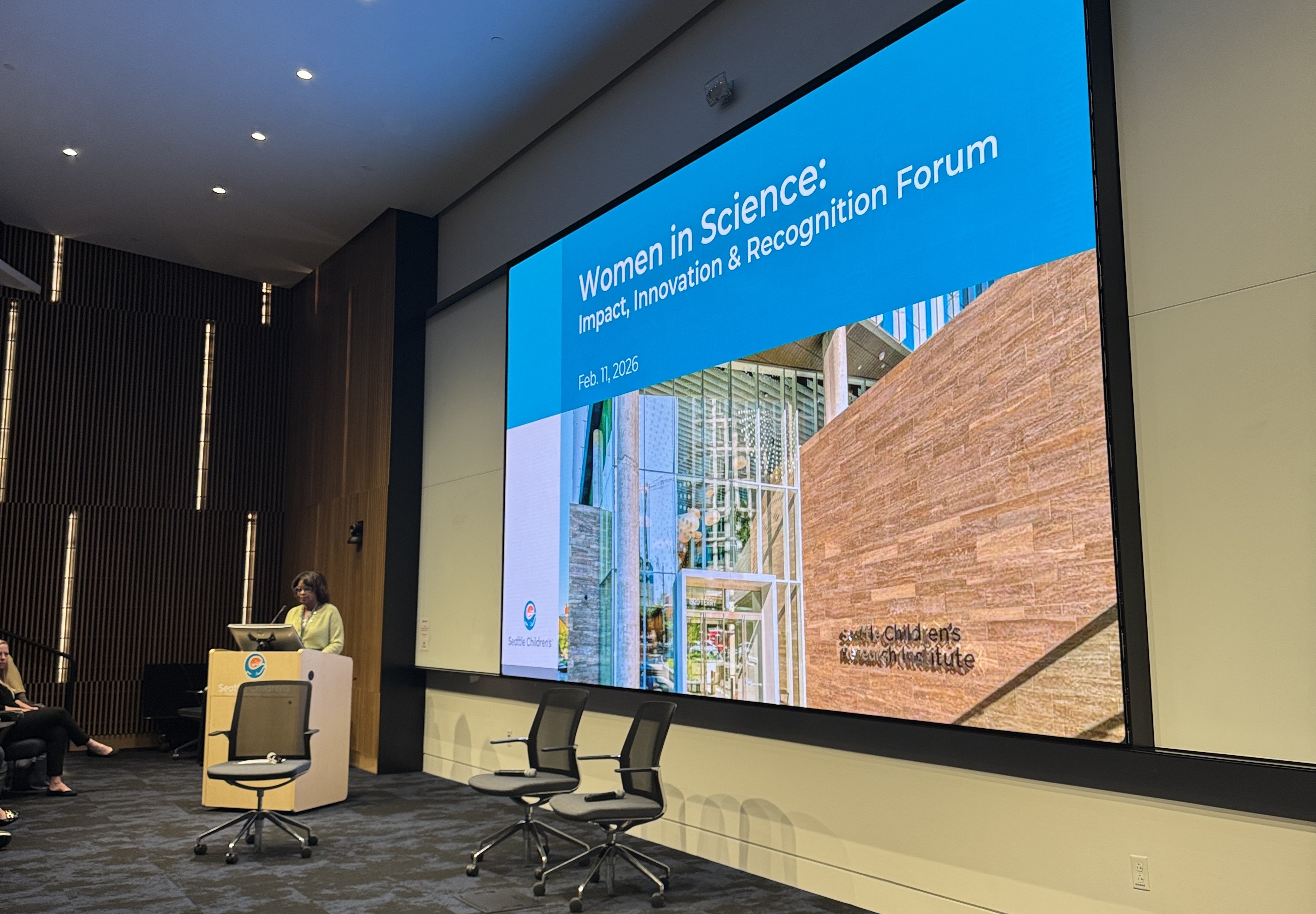
Several leaders from UW Pediatrics were featured in the first-ever Women in Science Symposium on Wednesday, hosted by the Seattle Children’s Research Institute (SCRI) Women’s Council. This event celebrated women scientists, highlighted research related to gender equity, and facilitated conversations ranging from mental health, mentorship, and community-building to grant writing and resource strategy.
The symposium aligned with the International Day of Women and Girls in Science, also on February 11, which recognizes the contributions of women and girls in STEM fields; highlights the gender gap that still exists; encourages girls and young women to pursue scientific education and careers; and celebrates role models of the past as well as innovators shaping the future.
In her opening remarks, Dr. Leslie R. Walker recognized that global science is stronger, innovative, and more impactful when women and girls are engaged and recognized. She stressed that representation matters, and that while we’ve made meaningful progress, women and women of color continue to be underrepresented. Dr. Walker continued on to say that supporting women in their science journeys, along with embedding equity and belonging in our work, is not just an initiative but a responsibility.
Next, Dr. Anne Slater offered her perspective on how the landscape has meaningfully changed over the years, with more women pursuing research, publishing, running clinical trials, and shaping scientific questions and innovations. She encouraged more of this progress and honored the pioneers of this work, who challenged norms and opened doors.
In the first session of the day, Dr. Douglas Opel moderated lightning talks from four leaders in their fields. Dr. Joelle Straehla highlighted work to make safer medicines for kids with pediatric cancer. Dr. Elizabeth Killien showcased research to bolster the pipeline of women physician-scientists. Dr. Mary Crocker designed community-informed interventions to protect children with asthma from wildfire smoke. Dr. Heather Jaspan explained the multifaceted effects of copper IUD on mucosal environment in African cisgender women.
A panel discussion led by Dr. Bonnie Ramsey focused on how women successfully navigate science and academia and deal with barriers. Dr. Terri Laguna, Dr. Carrie Heike, Dr. Tonya Palermo, and Daksha Ranade shared advice and strategies from their career and life experiences. They recommended surrounding yourself with people who understand you, showing up as your authentic self and trusting your own expertise, and aligning goals and projects with the values that are most important to you. The panel also encouraged leaders to model work/life balance and create spaces where mentees and teams feel comfortable asking colleagues for support or advice.
The afternoon session highlighted UW Pediatrics research leaders driving advances in genetics, gene therapy, public health policy, and kidney regeneration. Moderated by Dr. Emily Georges, speakers showcased groundbreaking work across SCRI: Dr. Kim Aldinger shared how cellular atlases are advancing precision therapeutics for neurodevelopmental disorders; Dr. Carol Miao presented innovative gene therapy strategies, including CRISPR-based and nonviral delivery approaches; Dr. Kate MacDuffie examined the future of newborn screening through whole-genome sequencing and its equity implications; and Dr. Elizabeth Nguyen discussed genetic and regenerative approaches to improving kidney recovery in pediatric patients.
The session concluded with a panel emphasizing mentorship, persistence, leadership, and reducing disparities in genetic testing, followed by closing remarks from Dr. Vittorio Gallo underscoring the importance of sustained support and community building to advance women in science.